On the machine, not inside it
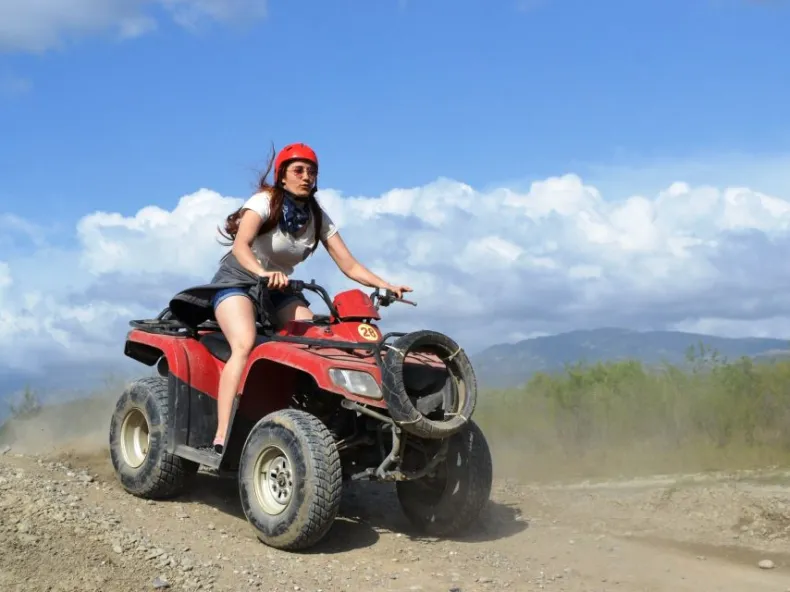
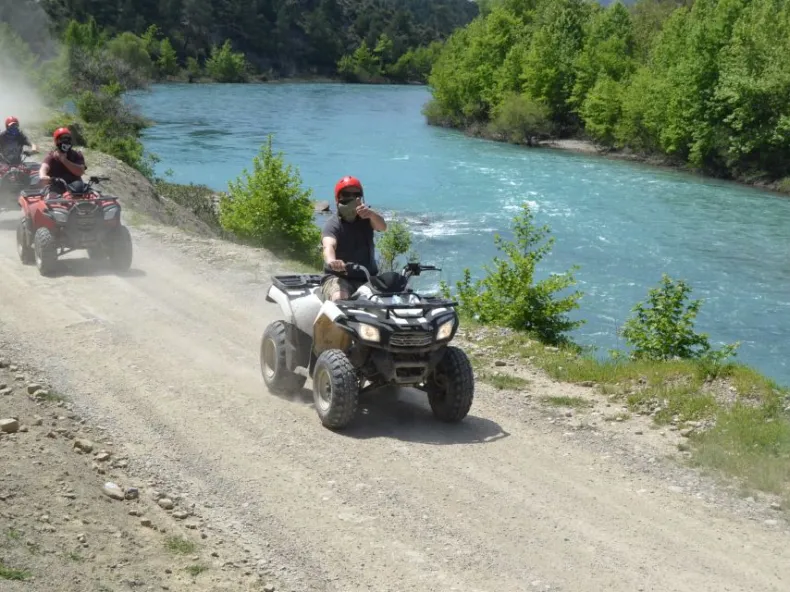
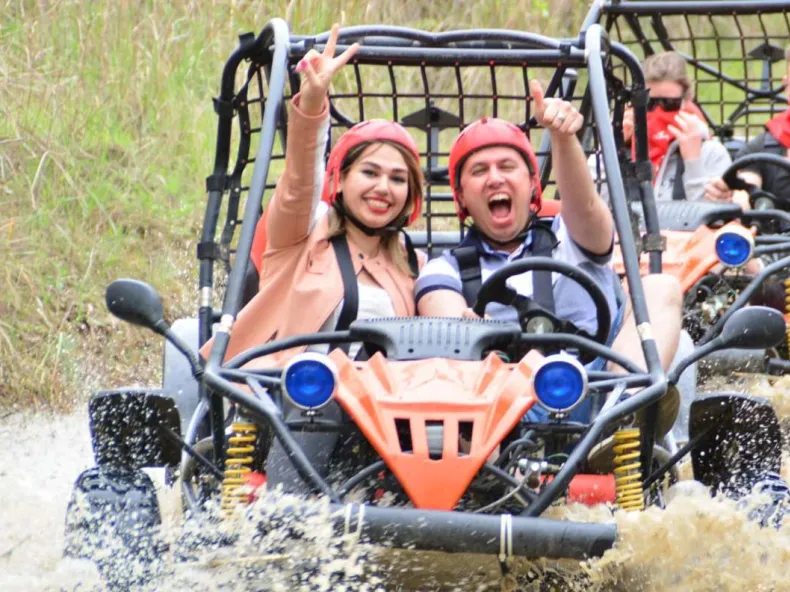
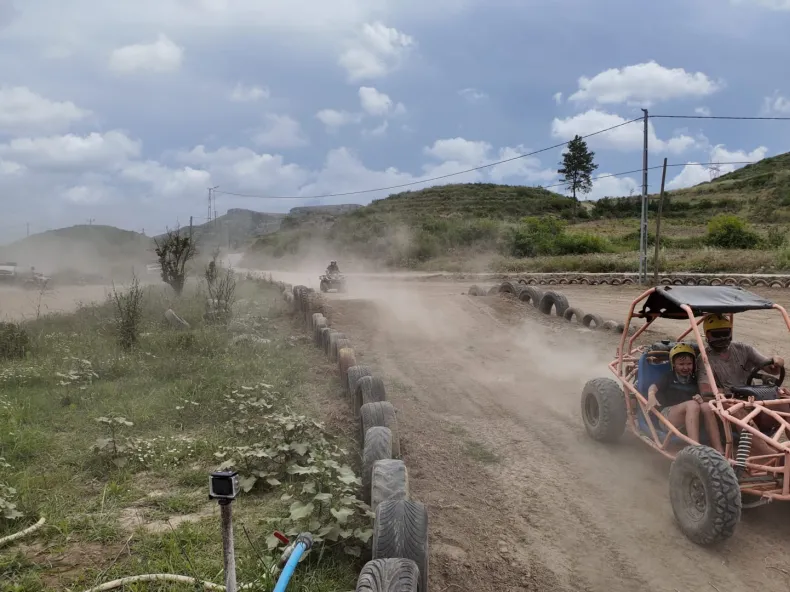
A buggy sits you low behind a wheel, inside the tubular frame around the seats. On a quad there is nothing around you: a saddle under you, feet on the pegs, both hands on the handlebar, the track a boot's width away rather than beyond a frame rail. You also look over the machine instead of past it, following your own line down a forest track. Same course, same briefings, same transfer, so this is the difference worth choosing on purpose.
What balance actually means here
Nothing acrobatic: four wheels hold the quad up and the guide sets the pace. It means your body is part of the steering. A buggy asks for your hands and feet and keeps the rest of you still; a quad brings your hips and shoulders into every turn, and a rider who sits square and rigid feels the machine arguing back. The vehicle briefing covers it before you touch the handlebar; the practice drive is where it stops being theory.
It can also be kinder to sit on than it looks. Ruts and uneven ground reach you through arms and legs as well as the saddle, so you meet them rather than only absorb them. With back or neck trouble, ask us first all the same: on a quad you are the last stage of the suspension.
Standing on the pegs
There is a reason riders come off the saddle over rough ground. With knees bent, the legs do the work the seat cannot, and what would have gone up your spine goes into your thighs instead.
On this course, though, the guide's instruction comes first: speed, distance, overtaking and stopping are set in the safety briefing, and you ride behind the guide. If you want to take the rough sections standing, ask during the vehicle briefing. That is the moment for it, and the answer is the guide's.
A thumb throttle after a lifetime of pedals
In a car the accelerator gets your whole leg, a heavy limb on a long lever, which is why you hold a steady speed without thinking about it. The quad gives that job to one thumb on a small lever, a short sweep of travel covering the same range of speed.
Two things follow. Small movements do more than you expect at first, which is what the practice drive is there to iron out before the main track. And a thumb tires in a way a foot never does, so riders soon learn to rest the hand and feed the throttle rather than hold it pinned.
Never ridden one? That is the normal case
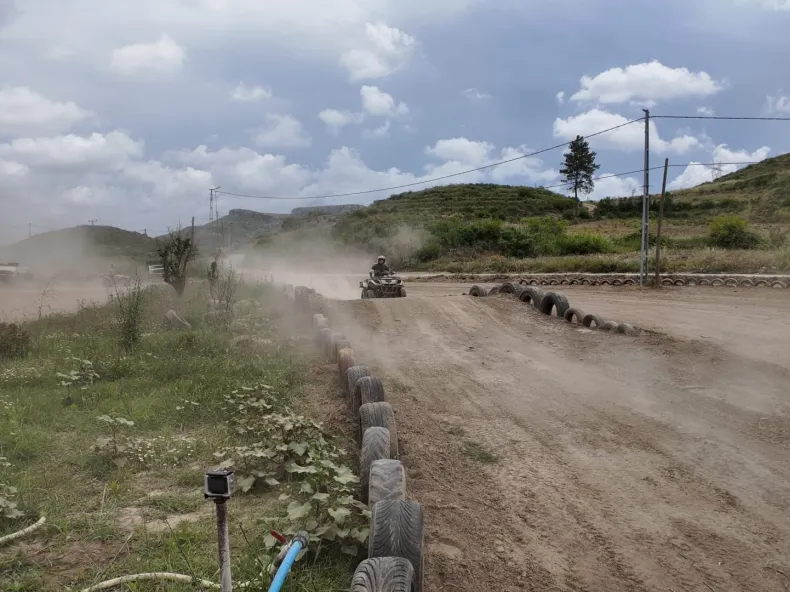
No experience is needed, and no driving licence is required: the safari runs on a private off-road course inland from the Side coast, not on public roads. Required instead: 16 or older with ID, the information and safety briefings, the vehicle briefing, the practice drive, and a guide who is satisfied on the day. The guide has the final say.
Nobody is let loose, either. You ride behind the guide, at the guide's pace, holding the distance the briefing set. And if the guide decides you should not drive, you ride the same route as a passenger at the adult fare of €{quadAdult}: same helmet, same dust, same water-splash stops.
A child aged 6–10 riding with you
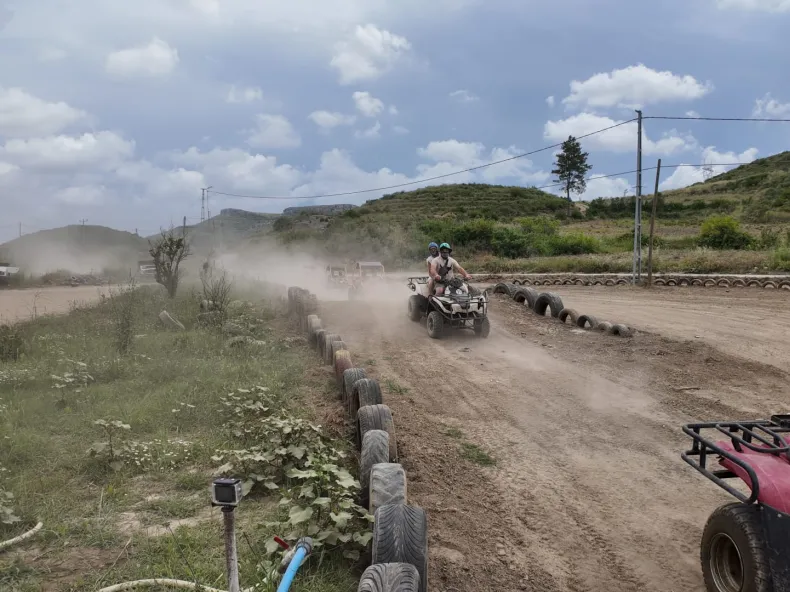
This is what the Buggy Safari cannot offer at all: a child between 6 and 10 rides with an adult on the quad at the child fare of €{quadChild}, the adult at €{quadAdult}. The child takes the briefings, wears a helmet for the whole safari, does not drive and does not take the practice drive. From 11 it is the adult fare either way; driving starts at 16 with ID.
Children under 6 cannot take part, because there is no seat we could offer them. And we publish no seat count for the vehicles, since the operator's own record does not state one: if you are hoping to put two children with one adult, ask on WhatsApp before you book. On an open machine a passenger meets as much dust as the driver, which is what the goggles and bandana sold at the base are for.